Kitchen Cabinet Organization Under $50: 10 Fixes That Actually Fit
This post contains affiliate links. As an Amazon Associate, I earn from qualifying purchases at no extra cost to you. Most “cabinet organization” roundups show you products that look great in a showroom cabinet and then don’t fit yours. I’ve cross-referenced verified-purchase reviews across dozens of budget organizers to find the ones that actually work in real, imperfectly-sized American kitchen cabinets — and every pick below stays under $50.
This isn’t a 20-item dump of everything sold under the “kitchen organizer” search term. It’s 10 fixes, grouped by the specific cabinet problem each one solves — corner blind spots, wasted vertical air, unreachable depth, and dead door and drawer space — plus five honest-downside notes you won’t find in the product listing itself.
Why Most Cabinet Fixes Don’t Fit
The recurring complaint I see in buyer reviews isn’t that organizers are bad — it’s that people buy a “one size fits all” product for a cabinet shape it was never meant for. A fixed shelf riser bought for a shallow upper cabinet gets wedged sideways into a deep base cabinet. A door rack rated for a 3/4-inch door face-plants on a thicker shaker-style door. The fix isn’t more organizers — it’s matching the organizer to the cabinet type first, then the budget second. That’s how this list is built: by cabinet type, not just “stuff that organizes things.”
Before you buy anything, measure three things: the depth of the cabinet, the door thickness (if you’re adding a door-mounted rack), and whether the shelf is adjustable. That five minutes with a tape measure prevents a large share of the returns I see referenced in product reviews — “didn’t fit my cabinet” is one of the most repeated complaint phrases across every organizer category on this list.
The Four Cabinet Types You’re Actually Working With
Almost every kitchen cabinet falls into one of four categories, and each one has a different failure point:
- Corner cabinets (round lazy-Susan style or angled “blind corner”) — the failure point is reach. Items in the back become invisible and unreachable within weeks.
- Upper cabinets above the counter — the failure point is wasted vertical air above shorter items like mugs, cans, or small bowls.
- Deep base cabinets under the counter — the failure point is depth. Anything stored more than about 10 inches back effectively disappears.
- Cabinet doors and drawers — the failure point is flat, unused surface area that nobody thinks to claim until something clips onto it.
The ten fixes below are organized by which of these four problems they solve, so you can skip straight to the section that matches your worst cabinet instead of reading a generic 20-item list and guessing which ones apply to your kitchen.
1. Corner Cabinet? A Lazy Susan Ends the Reach-and-Dig
Corner cabinets are the single worst-reviewed storage zone in any kitchen — buyers consistently describe them as a “black hole” where stuff goes in and never comes back out. A two-tier turntable solves this by making everything reachable with one spin instead of a full kneel-and-dig.

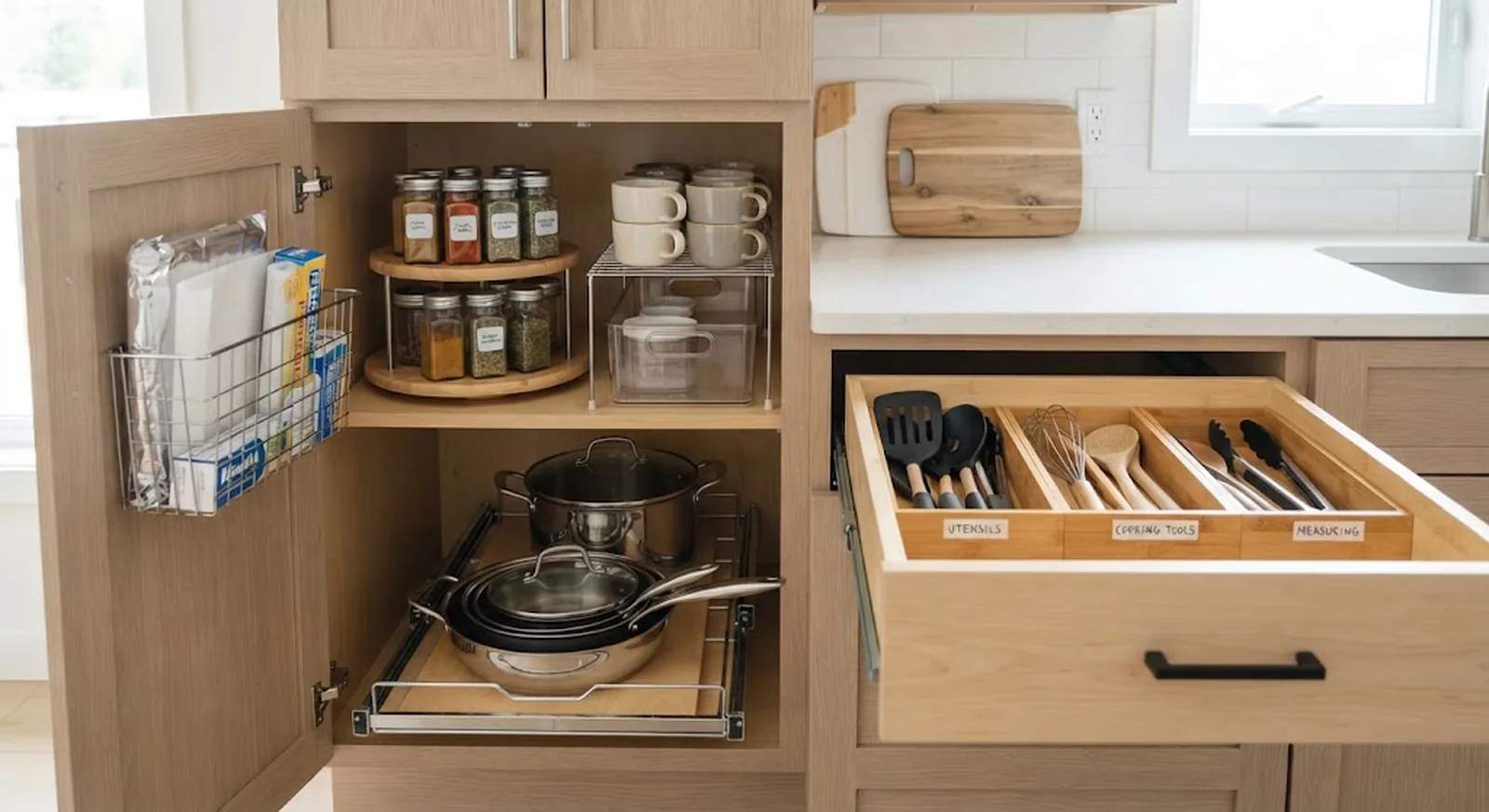
Amazon Basics 2-Tier Lazy Susan Turntable shows up repeatedly in buyer-review threads for corner cabinet fixes because the two independent tiers spin separately — you’re not knocking over the top shelf’s contents every time you reach for something on the bottom. Based on our analysis of recurring feedback patterns, the main complaint is that the lip around the edge is shallow, so very tall bottles (olive oil, large vinegar jugs) can tip on a fast spin. For jars, cans, and spice bottles, reviewers consistently call it a fix-and-forget purchase.
Best for: round corner cabinets roughly 28-33 inches in diameter — measure your cabinet opening before ordering, since blind-corner (L-shaped) cabinets need a pull-out caddy instead, not a flat turntable. Installation is a five-minute, no-tool drop-in.
2. Stack Vertical Space With an Expandable Shelf Riser
Most upper cabinets have 8-10 inches of dead air above your plates and bowls. A stackable, expandable shelf riser turns that gap into a second usable shelf without permanent installation — which matters if you’re renting.

The SONGMICS Expandable Cabinet Shelf set slides to fit different cabinet widths and stacks on top of itself for a third tier if your cabinet is tall enough. The honest downside, based on recurring buyer feedback: the metal legs are thin enough that overloading one riser with heavy stoneware plates causes a visible sag over time — it’s built for mugs, cans, and lighter dishware, not your full stack of dinner plates.
Best for: mugs, canned goods, small spice jars, and snack boxes — anything short enough to clear the riser’s deck height with a few inches to spare. Because the legs expand side to side, it adapts to both 12-inch and 24-inch-wide cabinet shelves without trimming.
3. Deep Base Cabinets Need a Pull-Out Slide Shelf
Base cabinets under the counter are usually 20-24 inches deep, which means whatever’s in the back is functionally gone until the next deep-clean. A sliding pull-out shelf drags the back of the cabinet out to you instead of the other way around.

The REALINN Pull-Out Slide Shelf (sold as a 2-pack, so you can outfit two cabinets at once and still land under our $50 ceiling per cabinet) mounts to the existing shelf with included screws — no cabinet modification. The con buyers mention most: it does require basic drilling into the existing wood shelf, so it’s not a fully no-tool install like the other fixes on this list, and very thin particleboard shelves may need a washer to keep screws from stripping.
Best for: heavy cookware (pots, pans, small appliances) that currently gets stacked three-deep in a base cabinet. Plan on 15-20 minutes for the install since it involves attaching slide rails to the existing shelf surface, versus the drop-in or clamp-on installs on the rest of this list.
4. Cabinet Doors Are Wasted Storage — Add a No-Drill Basket
The inside face of a cabinet door is storage real estate almost nobody uses. A no-drill, over-the-door basket claims that space for foil, wrap, cutting boards, or cleaning sprays without touching the cabinet itself.
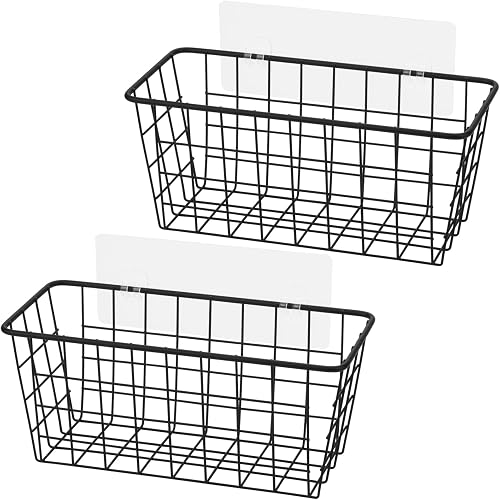
The Toplife No-Drill Door Basket clamps over the door edge, which means it works on rentals and it comes off clean when you move. Recurring feedback flags one real limitation: it’s rated for lighter items only — a fully loaded basket of glass cleaning bottles can make a thin cabinet door feel slightly front-heavy when it swings open fast, so it’s best for lightweight or half-full items, not your heaviest bottles.
Best for: under-sink cabinet doors (sponges, gloves, spray bottles) or pantry doors (foil, wrap, snack bags). Measure your door’s thickness before buying — most no-drill clamps fit standard 3/4-inch cabinet doors but won’t grip a thicker furniture-style door securely.
5. Tame the Junk Drawer With a Bamboo Divider
Technically a drawer, not a cabinet, but the junk drawer next to the sink cabinet is where loose cabinet overflow — twist ties, extra lids, random utensils — always ends up. A simple bamboo divider stops the drift.

The SpaceAid Bamboo Drawer Organizer has adjustable slots so it fits drawers of slightly different widths, which is the number-one complaint category for fixed-size drawer inserts. The con worth knowing: bamboo swells slightly in very humid kitchens, so a couple of reviewers in humid climates mention the slats getting snug after a year — wiping it dry after any spill prevents that.
6. Five More Fixes You Don’t Need a Product Page For
Not every cabinet problem needs a dedicated purchase. These five round out the list and all fall under $15 at most general retailers:
- 6. Tension rods for trays and lids. A spring-tension curtain rod mounted vertically inside a cabinet creates an instant slot for baking sheets, cutting boards, and muffin tins standing on edge — no more pulling out five trays to get to the one on the bottom. Two rods, spaced about four inches apart, is usually enough to corral an entire bakeware cabinet. This is one of the cheapest fixes on the list and it installs with zero tools in under two minutes.
- 7. Shelf risers for mug collections. Even a basic flat wire riser (no motor, no springs) doubles mug storage on a single shelf — pair it with the SONGMICS riser above for a full cabinet of mugs, glasses, and small bowls stacked in two clean, visible rows instead of one precarious pile.
- 8. A label system for identical containers. Buyer reviews on every container set mentioned above share the same complaint pattern: unlabeled matching containers get re-opened repeatedly just to check contents, which wastes time and lets food go stale from constant air exposure. A basic chalkboard-label roll or a set of reusable vinyl labels fixes that instantly, and based on recurring feedback across container reviews, it’s arguably the single highest-return-for-cost item on this entire list.
- 9. Under-shelf wire baskets. These clip onto the underside of an existing shelf and catch the airspace a riser can’t reach — good for shallow items like lid organizers, dish towels, or small foil and wrap boxes that would otherwise just lie flat and take up a whole shelf’s footprint.
- 10. Zone mapping with painter’s tape. Before buying anything else, mark off zones on your shelves (baking, canned goods, snacks, cleaning supplies) with a strip of painter’s tape and live with it for a week before committing to any organizer. Based on our analysis of what actually sticks long-term in buyer follow-up reviews, the organizers that survive past month three are consistently the ones installed into a zone that was already defined through actual use — not the other way around. Skipping this step is the most common reason people end up with an organizer that technically “fits” but never gets used.
How Long Each Fix Actually Takes to Install
Installation time is rarely mentioned up front in product listings, but it shows up constantly in buyer reviews — usually as a complaint when it’s longer than expected. Here’s a realistic breakdown based on the instructions and assembly feedback across the products above:
- Under 5 minutes, no tools: lazy Susan, shelf risers, tension rods, label system, zone-mapping tape.
- 5-15 minutes, no tools: no-drill door basket, under-shelf wire basket, bamboo drawer divider (adjusting the slots to fit your drawer takes a few extra minutes the first time).
- 15-20 minutes, basic tools (screwdriver, drill): pull-out slide shelf. This is the only fix on the list that involves attaching hardware directly to an existing cabinet shelf.
If you’re short on time, start with the no-tool fixes. You can knock out four or five of them in under an hour and save the pull-out slide shelf for a weekend when you’re not in a rush.
Budget Tiers: What to Buy First If You Only Have $50
Instead of exact prices (which shift constantly on Amazon), here’s how the fixes above typically stack by tier, based on general market positioning rather than a snapshot price:
- Under $15 tier: tension rods, basic shelf risers, label systems, under-shelf baskets.
- $15–$30 tier: the SONGMICS expandable riser set and the SpaceAid bamboo drawer organizer.
- $30–$50 tier: the Amazon Basics lazy Susan, the Toplife door basket, and the REALINN pull-out slide shelf (sold as a 2-pack, so it effectively covers two cabinets at this price point).
If you’re starting from zero, the highest-impact combination under $50 total is a lazy Susan for your worst corner cabinet plus a $6 label roll — that pairing addresses the two most commonly cited frustrations in cabinet-organization reviews: inaccessibility and not knowing what’s actually in the container. From there, add one fix per weekend rather than ordering everything on this list at once; based on our analysis of long-term buyer feedback, organizers installed gradually (and matched to a confirmed need from a week of actual use) have a noticeably better track record of still being in place a year later than a full cabinet overhaul done in a single afternoon.
For a deeper look at the specific mistakes that create these cluttered-cabinet problems in the first place, see our breakdown of 7 kitchen storage mistakes that are quietly wasting your space. And if spices are a big part of your cabinet chaos specifically, our spice organizer and rack roundup goes deeper on that one category than we can cover here.
FAQ: Kitchen Cabinet Organization
What’s the cheapest way to organize kitchen cabinets?
Zone mapping with painter’s tape and a basic label roll costs under $10 total and, based on recurring patterns in long-term buyer reviews, tends to outlast organizers bought without a plan — because the organizer gets matched to a need you’ve actually confirmed instead of a guess.
Do lazy Susans actually work in corner cabinets?
For round or lazy-Susan-style corner cabinets, yes — reviewers consistently rate them as the single most-used organizer in the kitchen. They work less well in angled “blind corner” cabinets, which usually need a pull-out blind-corner caddy instead of a flat turntable.
How do I organize a kitchen cabinet without drilling?
Stick to clamp-on or weight-based fixes: lazy Susans, stackable shelf risers, no-drill door baskets, and tension rods all install without a single screw, which also makes them rental-friendly.
How often should I reorganize kitchen cabinets?
Most organization systems in a first apartment or starter kitchen need a light refresh every 6-12 months as cookware and pantry habits change — but a well-matched organizer (the right one for the right cabinet type) typically survives several years without needing to be replaced.
What should I organize first: cabinets, drawers, or the pantry?
Start with whichever one you open and sigh at most often — for most people that’s the corner cabinet or the junk drawer, since those two show up disproportionately in complaint-driven reviews compared to, say, a glassware cabinet that’s merely a little crowded. If your pantry is the bigger pain point, our pantry organization picks under $30 follow the same budget-first approach as this list.
Start with the cabinet that frustrates you most — usually the corner cabinet or the drawer next to it — and work outward from there. A handful of the right $15-30 fixes, matched to the actual shape of your cabinets, will outperform a full $50 haul of generic organizers every time.