How to Clean a Cast Iron Skillet Without Ruining the Seasoning
Some of the links below are affiliate links. If you buy through them, I may earn a small commission at no extra cost to you. I only point to gear that holds up well based on verified buyer reviews and spec comparisons.
Most cast iron skillets don’t get ruined by cooking — they get ruined by cleaning. Someone scrubs off a stuck-on bit of egg with steel wool, or leaves the pan soaking in the sink overnight, and a month later the seasoning is patchy and food sticks everywhere again. The fix isn’t avoiding soap and water like your grandmother warned — it’s knowing which habits actually strip seasoning and which ones are just old kitchen folklore.
The quick answer: how to clean a cast iron skillet
- Clean it while it’s still warm, not screaming hot and not cold — rinse with hot water.
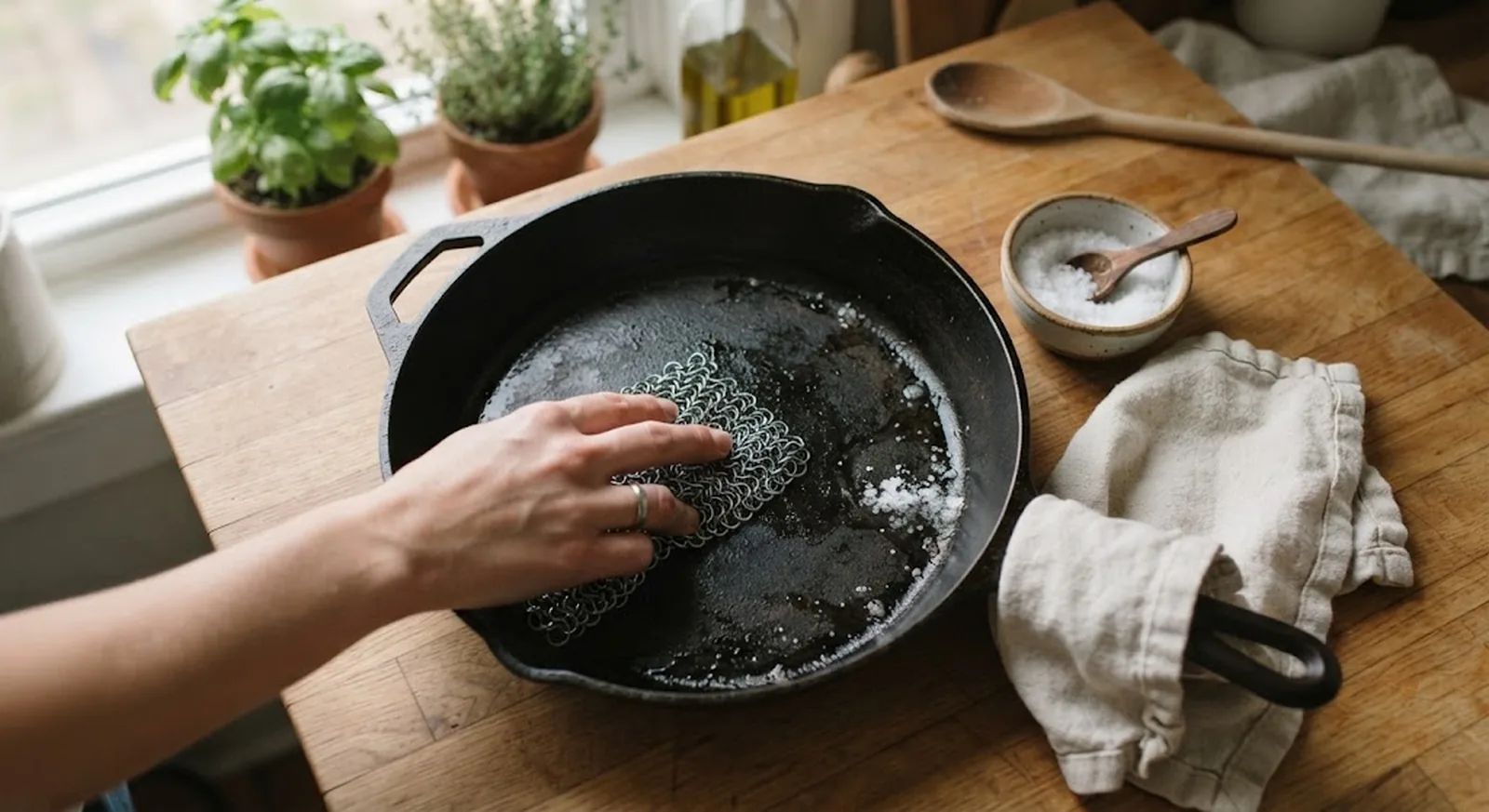
- A few drops of mild dish soap are fine; scrub with a chainmail scrubber, stiff brush, or non-abrasive sponge.
- For stuck-on food, use a coarse salt scrub or a sprinkle of baking soda instead of forcing it with metal.
- Dry it completely — towel first, then a minute on a warm burner to drive off every trace of moisture.
- Wipe on a tiny amount of neutral oil and buff off the excess before you put it away.
That five-step routine takes about two minutes and is really the whole guide. The rest of this post is the reasoning behind each step, because understanding why is what stops you from undoing your own seasoning by accident.
Is soap actually ruining your seasoning? (No — here’s why)
The “never use soap on cast iron” rule is one of the most repeated myths in the kitchen, and it’s outdated. It dates back to when dish soap was made with lye — harsh enough to actually eat through a seasoning layer. Modern dish soap is a mild detergent designed to cut grease, not dissolve a polymerized oil coating that’s chemically bonded to the iron. A food scientist at Virginia Tech has made the same point publicly: seasoning is a polymer, and washing with soap doesn’t wash off a layer that’s already fused to the metal.
That said, soap usually isn’t even necessary — hot water and a good scrub handle most of the cleanup on their own. Save the soap for a pan that cooked something greasy or pungent (fish, bacon, a sauce with a lot of garlic). Large amounts of soap used aggressively, repeatedly, can thin out seasoning over time, but a few drops and a rinse on a well-seasoned pan is not the disaster it’s made out to be, and it’s easy to rebuild a few layers if it ever looks thin.
For stuck-on food: salt and baking soda beat steel wool
Reaching for steel wool or an abrasive scouring pad on stuck-on food is the fastest way to actually damage seasoning — it’s genuinely aggressive enough to scrape through the bonded layer, not just the debris sitting on top. Two gentler methods handle almost everything:
- Salt scrub: sprinkle coarse salt into the warm pan, add a small splash of oil, and scrub with a paper towel or cloth. The salt acts as a mild abrasive that lifts stuck particles without touching the seasoning underneath.
- Baking soda: for greasier residue, a tablespoon of baking soda with a little water and a stiff brush works the same way — gentle mechanical scrubbing power without scratching.
For something really burnt on, a short soak — 10 to 15 minutes in warm water, not overnight — can loosen it enough for the chainmail or a brush to finish the job. Keep it short. Extended soaking is where rust actually starts, not a quick rinse.
The drying step that matters more than the cleaning
Here’s the detail that trips up more people than soap ever does: leaving the pan wet does more damage than any amount of dish soap. Cast iron left damp on a dish rack is exactly how rust starts and seasoning thins out. Soap and water genuinely won’t hurt a properly seasoned pan — skipping the drying step will.
The routine that actually protects the pan long-term:
- Towel-dry immediately after washing — don’t let it air-dry on a rack.
- Set it on a warm burner for 60–90 seconds to evaporate any moisture hiding in the handle rivets or pan corners.
- While it’s still slightly warm, wipe on a few drops of neutral oil and buff off the excess with a clean cloth until the surface looks almost dry, not glossy.
That last wipe isn’t a full re-season — it’s just topping off the existing layer so the pan is ready for next time. A full oven re-season is only needed for restoration work; see my guide to seasoning a cast iron skillet for that step-by-step.
4 cleaning mistakes that actually wreck cast iron
- Dishwasher. The combination of harsh detergent, prolonged water exposure, and air-drying is close to the worst possible treatment for seasoning. Never run cast iron through a dishwasher.
- Soaking or leaving it wet. Covered above, but worth repeating — this is the single biggest cause of rust and seasoning breakdown, not soap.
- Steel wool or abrasive scouring pads. Fine for stripping a pan down to bare metal on purpose; a bad idea for routine cleaning.
- Cold water on a hot pan. Rinsing a screaming-hot skillet under the cold tap can cause thermal shock — enough to warp or even crack the iron. Let it cool slightly first, or use warm water.
These four habits show up repeatedly in my roundup of kitchen habits that wreck your cookware — cast iron isn’t the only pan type they damage.
Recommended gear for cleaning cast iron
Lodge Chainmail Scrubber

This is the tool that makes the salt-scrub method mostly unnecessary. The stainless rings knock loose stuck-on food without being abrasive enough to touch bonded seasoning underneath — genuinely satisfying to use on a crusty pan. The downside: bits of food can wedge between the rings, so give it a rinse and a shake after each use, and hang it to dry or it can rust.
Field Company Cast Iron Seasoning Oil

The post-wash oil wipe is the step people skip, and a pre-blended seasoning oil makes it harder to skip — it lives by the stove instead of in a cabinet with the cooking oils. It’s a grapeseed-and-sunflower blend made specifically for this job, and the thin formula wipes on and buffs off easily. The honest catch: it’s really just a high-smoke-point neutral oil at a premium price, and plain grapeseed oil from the grocery store does the same thing for less. Worth it mainly for keeping the routine convenient.
FAQ
Can I use soap on cast iron without ruining the seasoning?
Yes. A few drops of mild dish soap won’t strip properly bonded seasoning — the “no soap” rule comes from old lye-based soaps that no longer exist on store shelves. Just don’t soak the pan or leave it sitting wet afterward.
Can cast iron go in the dishwasher?
No. The combination of strong detergent, long water exposure, and air-drying is one of the fastest ways to strip seasoning and start rust. Always hand wash.
My cast iron has rust spots — did I ruin it?
Surface rust is fixable, not fatal. Scrub the rusty spots back to bare metal with the chainmail or a stiff brush, dry thoroughly, and run through a full oven re-season. See my seasoning guide for the step-by-step.
Do I need to re-season every time I wash it?
No — a quick wipe of oil after drying is enough for routine maintenance. A full oven re-season is only for restoring a pan that’s rusty, flaking, or patchy.
Get the drying-and-oil habit right and cast iron is genuinely low-maintenance — most of the “rules” people stress over turn out to be myths once you know what’s actually bonded to the metal. If you’re still deciding which skillet to buy in the first place, my best cast iron skillets roundup and cast iron vs. carbon steel comparison cover how to pick one that fits the way you cook.